Wednesday, July 25, 2012

Activity 6: States of Matter and Interolecular Forces

Activity 6: States of Matter and Intermolecular Forces

We are all familiar with the states of matter (solids, liquids and gases) for many substances. In the First Activity we explored these states of matter for water. In Activity 6, we would like to take our overall understanding of states of matter to the molecular level. We will use the States of Matter simulation at http://phet.colorado.edu/ .

There are two key characteristics of molecules that determine their state of matter. The first one is the temperature of the matter, and the second one is the intermolecular forces (how well atoms/molecules stick to one another) between atoms and molecules.
  • One of the first things to think about here is temperature. Temperature and thermometers have a very similar relation to speed and speedometers. For all practical purposes, a thermometer is really a speedometer for molecular speed or motion.
At the site http://www.visionlearning.com/library/module_viewer.php?mid=48 shows a good overview of temperature with a good image of the temperature scales and conversions between different scales.

Notice that the Kelvin scale starts at zero and goes up from there. This is like our car speedometer, in that at 0 Kelvin (K), molecular and atomic motions stop.  As the temperature rises, atoms and molecules begin to move faster and faster.
  • The second thing to consider is the intermolecular forces (attractions) that exist between molecules. In the D2L content slides there are a few types of attractions described, notice all of these are defined by the attraction that exists between positive and negative charges. Water is a great example of a molecule that has strong attractions that we call hydrogen bonding. It is this strong attraction that makes water a unique molecule on our planet. It turns out that the hydrogen atoms tend to be positive in charge, and the oxygen atoms tends to be negative in charge.
1. Convert to Kelvin:  0°F=  255.222 K  32°F=273 K   70°F=294.261 K   212°F=373.150 K

2. Complete the Teaching Idea: States of Matter Simulation Lab by Kelly Vaughan:

Name: Visualizethis39/penaj         Date: July 25, 2012

Class: Visualizing Chemistry 105, Dr. Shultz   

 States of Matter Simulation Lab
PREDICT
1. Draw a diagram below showing what you think the molecules will look like for each state of matter, solid, liquid, and gas. Write a sentence below each diagram predicting what the motion of the molecules will be like.


Solid
Liquid
Gas
Diagram of molecules
 

Sentence explaining how molecules will be moving.
  Slowly 
 Evenly, constantly
 More quickly

2. If you start with a substance as a solid, what will happen to the molecules as you add thermal energy (heat)?  They will speed up, creating energy.

INVESTIGATE:
3. Use the menu on the right side of the program to select Water and Solid. Draw and describe what you see in the space below.

Diagram
Description
 
 The molecules are lighter in weight and are not moving very fast.

4. Now, use the slider on the bottom of the program to Add Heat. Notice the thermometer at the top of the program. What temperature scale is this thermometer showing?  157 K
5. What happens to the water as you increase the temperature?  The water molecules separate and move faster due to increasing temperature; speed increases, like a speedometer.
6. What is the melting/freezing point of water in Kelvin?  273.15 K

7. Add heat until the temperature is just below and then just above the melting point of water. How is water different below its melting point and above it?   In the melting point the water is becoming a liquid, getting colder, and at boiling point the water is becoming a gas and is getting hotter therefore moving faster.

8. Draw and describe what water looks like as a liquid.
Diagram
Description
 
 
 The water molecules are dispersed on the bottom evenly and start to move around/become active.

 9. What is the boiling/condensation point of water in Kelvin?  373.15 K.  The process by which a gas becomes a liquid.

10. Continue to add heat until you are just below and then just above the boiling point of water. How is water different below its boiling point and above it?   Molecules either move slower or faster, decreasing or increasing in pressure and evaporation due to the decreasing or rising of temperature.

11. Draw and describe what water looks like as a gas.
Diagram
Description
 
Water molecules move faster and further apart and move randomly and rapidly.

12. Choose one of the other three substances listed in the menu on the right. Investigate what happens when you add and remove heat from this substance. Use the buttons on the right to see this substance as a solid, liquid, and gas. Draw and describe its properties in the table below.
Substance Selected:  Oxygen
Gas:  The particles of a gas are far apart and move randomly, yet rapidly.
Liquid:  aka CO2.  The particles of a liquid are free to move within the confines of the liquid; no organized pattern.
Solid:  The particles of a solid have fixed positions and exhibit motions of vibrations; bounce off of each other.

ANALYZE:
13. How was this substance similar to water in each state of matter? How was it different?  Although different states of matter, oxygen acts almost identical to water in the means of how fast or slow they move due to increasing or decreasing temperature.  The major difference, however, is that CO2 is produced from oxygen.    

14. Were your predictions (see p. 1) correct or incorrect? Explain.   Yes, my predictions were correct because molecules speed up with an increased temperature and vise versa.
BONUS: Optional, worth up to 10 points added to the lab’s final grade

15. Choose a substance other than water from the menu on the right side of the program. Use the slider to add and remove heat. Based on what the molecules do, figure out the approximate temperatures of the melting point and boiling point of this substance. (Hint: The temperatures given when you click solid, liquid, and gas are NOT the melting and boiling points.)

Substance:  Neon

Melting Point:  25 K

How did you figure it out?  Because the molecules start to move more slowly.

Boiling Point: 27 K

How did you figure it out?  The exact point couldn't be determined because of the molecules moving rapidly.
3. In the States of Matter simulation, choose the Solid, Liquid, and Gas Tab at the top of the screen. Choose the water molecule and cool the water to 0 K. Describe how the water molecules are aligned and attracted to each other. Which atoms are attracted to which other atoms?

Dipole forces are oppositely charged ends and will attract each other.  For example, hydrogen bonds are created when a hydrogen atom is covalently bonded to a high electronegative atom.


4. Switch to the Phase Changes Tab on the States of Matter simulation. Notice how on the bottom right there is a small red dot that indicates where the system is at as far as temperature, pressure and state of matter. Play with the simulation to notice changes, notice that when you push down the pressure can go way up and explode the box. On your blog, report a temperature and pressure required to make oxygen a liquid. This is sometimes how the oxygen exists in pressurized oxygen tanks, perhaps like ones you may use to go diving.  155 K  Because of the high consistent pressure of oxygen that turns into water the ionic substances dissolve creating an interactions.  The same concept happens in reverse when pressure is used to fill pressurized oxygen tanks.

5. List and describe at least two Science Standards that this activity addresses.
Content Science G, Applications and Content Standard Science D, Physical Science.

Activity 5: Density
One of the most common attributes of chemical materials that we observe and feel on a daily basis is the density of materials. One of the things we notice in the structures of atoms, is that the atom is mostly space, with a small heavy nucleus and very light electrons orbiting the nucleus. So, how heavy something feels is related to how many protons and neutrons are in the nucleus of atoms that make up molecules. For example, aluminum is much lighter than iron. The "heaviness" of a material is quantified through a characteristic called density.

Simulations and gaming aid in our understanding of chemical principles that I used to complete the following, will be found at this site: http://phet.colorado.edu/
1. Neutral lithium atom. P=3 N=3 E=3 


The density for a neutral lithium atom is: Melting Point: 180.54 °C (453.69 K, 356.972 °F)  Boiling Point: 1347.0 °C (1620.15 K, 2456.6 °F)

    A neutral boron atom:  P=5  N=6  E=5
The density for a neutral boron atom is:
Melting Point: 2348 K (2075°C or 3767°F)
Boiling Point: 4273 K (4000°C or 7232°F)
Density: 2.37 grams per cubic centimeter

2. According to the text, Chemistry for changing times(Hill & Kolb), the definition for density is, the quantity of mass per unit volume; otherwise written as:
Density

3. Teaching Ideas:  Energy Skate Park  http://phet.colorado.edu/en/simulation/energy-skate-park

4. Mystery Block Density Simulation Data

Mass
Volume
Density
Wood
2.05
5.12
0.40kg/L
Ice
4.71
5.12
0.92kg/L
Brick
10.25
5.12
2.00kg/L
Aluminum
13.84
5.12
2.70kg/L

5. Science Standards that could be met through the above activities are: 
Content Standard Science A: Students in Wisconsin will understand that there are unifying themes: systems, order, organization, and interactions; evidence, models, and explanations; constancy, change, and measurement; evolution, equilibrium, and energy; form and function among scientific disciplines.

Content Standard Science B, Nature of Science: Students in Wisconsin will understand that science is ongoing and inventive, and that scientific understandings have changed over time as new evidence is found.
Rationale
Students will realize that scientific knowledge is developed from the activities of scientists and others who work to find the best possible explanations of the natural world. Researchers and those who are involved in science follow a generally accepted set of rules to produce scientific knowledge that others can confirm with experimental evidence. This knowledge is public, replicable, and undergoing revision and refinement based on new experiments and data.

Content Standard C, Science Inquiry: Students in Wisconsin will investigate questions using scientific methods and tools, revise their personal understanding to accommodate knowledge, and communicate these understandings to others.
Rationale
Students should experience science in a form that engages them in actively constructing ideas and explanations and enhances their opportunities to develop the skills of doing science. Such inquiry (problem solving) should include questioning, forming hypotheses, collecting and analyzing data, reaching conclusions and evaluating results, and communicating procedures and findings to others.

Including:  Content Standard D (Physical), Content Standard Science, G (Applications),Content Standard H (Personal and Social Perspectives).


Activity 4: Exploration of Science Education Standards

This activity offers an opportunity for future educators, parents and members of society to understand the expectations society has created for science education standards.

This activity, in particular, refers to the Wisconsin Science Standards  http://www.dpi.state.wi.us/standards/sciintro.html

I chose a sub-standard under each of the Standards A through H with a description of something that I have done, or that I am in the processes of up-grading that knowledge in regards to the Wisconsin mandates for school-aged children.
First, a quick Introduction to the Wisconsin's Model Academic Standards for Science:

The study of science allows Wisconsin students to experience the richness and excitement of the natural world. As adults they will face complex questions requiring scientific thinking, reasoning, and the ability to make informed decisions. Scientific knowledge prepares students for the future and helps them acquire skills needed to hold meaningful and productive jobs. These content and performance standards recognize that science is for all students-the essence of science literacy (http://www.dpi.state.wi.us/standards/sciintro.html). 
Second, Clarity and Specificity: Citizens of Wisconsin are the primary audience for the science standards. The standards set clear and specific goals for teaching and learning, and they are not meant to supplant curriculum. Instead, they should help school districts to develop curriculum units that focus on specific academic results. Districts are encouraged to engage in professional conversations suggested by this document and by the National Science Education Standards* (see Glossary of Terms). Parents and citizens in the district should be a part of this conversation.  The Wisconsin science standards follow the format and content of the National Science Education Standards. Three of the content standards (D. Physical Science; E. Earth and Space Science, and F. Life and Environmental Science) address the knowledge-base of science, while the other content standards address the application of knowledge. A reader looking for more of the details inherent in the content standards may refer to the National Science Education Standards.

The following are sub-standards A-H:

A.4.3 When investigating a science-related problem, decide what data can be collected to determine the most useful explanations: The school-age children program I am currently working with this summer have been tending their own garden.  They have researched and have been taught how to identify different plants, such as, tomato's, basil, melons, potato's, peas, beans, and swiss chard.  They were taught how to identify the difference in seeds, sprouts versus weed, and how to identify each plant by the way it grows and by determining the differences in leaves, then the final product of taste.  The children also learned how to identify "pesticide float" poisoning on the plant versus how they attempted to keep all poisons off of the plants and determining the explanations of if each plant grew properly.  The children also learned how to identify and explain when to weed and water the garden and explain the differences of what would happen to the plants if not cared for properly.  For example, the burning of plants by heat, under watering, et cetra.  
  • Content Standard: Students in Wisconsin will understand that there are unifying themes: systems, order, organization, and interactions; evidence, models, and explanations; constancy, change, and measurement; evolution, equilibrium, and energy; form and function among scientific disciplines.
    These themes relate and interconnect the Wisconsin science standards to one another. Each theme is further defined in the Science Glossary.
  • Rationale
    These unifying themes are ways of thinking rather than theories or discoveries. Students should know about these themes and realize that the more they learn about science the better they will understand how the themes organize and enlarge their knowledge. Science is a system and should be seen as a single discipline rather than a set of separate disciplines. Students will also understand science better when they connect and integrate these unifying themes into what they know about themselves and the world around them.

B.4.3 Show* how the major developments of scientific knowledge in the earth and space, life and environmental, and physical sciences have changed over time:  The 4K children I have worked with at the Child and Family Study Center at the University of Wisconsin, Stout have access to some of the best resources which include their teachers.  Because UW-Stout is equipped with a lab to help educated the college students the trickle down effect to the children who attend our child care facility is phenomenal.  The early childhood education program (birth-3rd grade) makes adjustments to the program in order to keep up with standards required by the state of Wisconsin.  We are Young Star approved obliged to the highest rating of a five star approval and we are also accredited by the National Association of the Education of Young Children (NAEYC).
  • Content Standard: Students in Wisconsin will understand that science is ongoing and inventive, and that scientific understandings have changed over time as new evidence is found.
  • Rationale Students will realize that scientific knowledge is developed from the activities of scientists and others who work to find the best possible explanations of the natural world. Researchers and those who are involved in science follow a generally accepted set of rules to produce scientific knowledge that others can confirm with experimental evidence. This knowledge is public, replicable, and undergoing revision and refinement based on new experiments and data
C.4.4 Use simple science equipment safely and effectively, including rulers, balances, graduated cylinders, hand lenses, thermometers, and computers, to collect data relevant to questions and investigations:  Science, technology, engineering, and math (STEM) and as I now  refer to he components as STEAM, the "A" representing the arts.  The older children at the CFSC are able to be equipped with equipment such as goggles for eye protection, smocks to protect their body, magnifying glasses, thermometers, rulers, tape measures, computers, sensory tables, tweezers, and microscopes.   The children are taught the appropriate scientific names to the above mentioned items while being shown how to use the instruments correctly then asked to compare and contrast outcomes with their predictions.  The younger children are also included in science.  They are equipped with gravitational science toys such as balls and tunnels, wind machines, tape measures, magnifying glasses, sensory tables, and plastic colored lenses to look through, etc.
  • Content Standard: Students in Wisconsin will investigate questions using scientific methods and tools, revise their personal understanding to accommodate knowledge, and communicate these understandings to others.
  • RationaleStudents should experience science in a form that engages them in actively constructing ideas and explanations and enhances their opportunities to develop the skills of doing science. Such inquiry (problem solving) should include questioning, forming hypotheses, collecting and analyzing data, reaching conclusions and evaluating results, and communicating procedures and findings to others.
D.4.3. Understand that substances can exist in different states-solid, liquid, gas:  In my previous work with the children at the CFSC and in my present work teaching children ages 5-10 we have done experiments with freezing water into ice and also painting with ice that had been colored with food dye.  The children and I discuss how the water freezes from a liquid and how diffusion works.
  • Content Standard: Students in Wisconsin will demonstrate an understanding of the physical and chemical properties of matter, the forms and properties of energy, and the ways in which matter and energy interact.  Note: For more details of the content of physical sciences, see National Science Education Standards* (1996, p. 115 - 201).
  • RationaleKnowledge of the physical and chemical properties of matter and energy is basic to an understanding of the earth and space, life and environmental, and physical sciences. The properties of matter can be explained in terms of the atomic structure of matter. Chemical reactions can be explained and predicted in terms of the atomic structure of matter. Natural events are the result of interactions of matter and energy. When students understand how matter and energy interact, they can explain and predict chemical and physical changes that occur around them.

E.4.4 Identify celestial objects (stars, sun, moon, planets) in the sky, noting changes in patterns of those objects over time:  The school-age children I am currently working with had a weather themed week where we talked about rain and how light reflects to create rainbows and sun dogs.

We also viewed a solar eclipse on-line at http://abcnews.go.com/Video/playerIndex?id=16397676 

and talked about current moon faces at http://www.moonconnection.com/current_moon_phase.phtml 
  • Content Standard: Students in Wisconsin will demonstrate an understanding of the structure and systems of earth and other bodies in the universe and of their interactions.  Note: For more details of the content of earth and space sciences, see National Science Education Standards* (1996, p. 115 - 201).
  • RationaleBy studying earth, its composition, history, and the processes that shape it, students gain a better understanding of the planet on which they live. In addition, all bodies in space, including earth, are influenced by forces acting throughout the solar system and the universe. Studying the universe enhances students' understanding of earth's origins, its place in the universe, and its future. Understanding these geologic, meteorological, astronomical, and oceanographic processes allows students to make responsible choices and to evaluate the consequences of their choices.

F.4.3 Illustrate* the different ways that organisms grow through life stages and survive to produce new members of their type: In an animal theme I do for children is to provide a section on ocean animals/fish.  One amazing happening which also supports the eduction of reproduction and birth is a video clip I show with a [male] seahorse giving birth.  This 45 second video provides and covers many aspects of the cycle of life  and that children's curiosity sparks many questions and comments to:  http://www.youtube.com/watch?v=uKrkXXaRMUI
  • Content Standard: Students in Wisconsin will demonstrate an understanding of the characteristics and structures of living things, the processes of life, and how living things interact with one another and their environment.  Note: For more details of the content of life and environmental sciences, see National Science Education Standards* (1996, p. 115 - 201).
  • RationaleStudents will enhance their natural curiosity about living things and their environment through study of the structure and function of living things, ecosystems, life cycles, energy movement (transfer), energy change (transformation), and changes in populations of organisms through time. Knowledge of these concepts and processes of life and environmental science will assist students in making informed choices regarding their lifestyles and the impact they have on communities of living things in their environment.
G.4.3 Determine what science discoveries have led to changes in technologies that are being used in the workplace by someone employed locally:  The day care I work at is ECO-FRIENDLY/AWARE which provides an abundant of healthy ways of living for our children and education to their families and the community, such as, BPA free toys, marmoleum flooring, light tunnels, all organic foods, filtered water for us to drink, rain barrels to provide watering to our garden, etc.  With this mind set our staff include the teachings of our local resources such as the farmer's market, wind and solar facilities, Lake Menomin department of natural resource association for cleaner water, and the Ethanol plant Western Wisconsin Energy LLC (WWE) http://www.westernwisconsinenergy.com/
  • Content Standard: Students in Wisconsin will demonstrate an understanding of the relationship between science and technology and the ways in which that relationship influences human activities.
  • Rationale: Science and technology compliment each other. Science helps drive technology and technology provides science with tools for investigation, inquiry, and analysis. Together, science and technology applications provide solutions to human problems, needs, and aspirations. Students should understand that advances in science and technology affect the earth's systems.

H.4.2 Using the science themes*, identify* local and state issues that are helped by science and technology and explain* how science and technology can also cause a problem:  The ethanol plant, WWE, for example provides locally grown crown to provides natural recourse of food for cow with and a fuel resource.  Although the production of ethanol is energy efficient the output of CO2 is contradicting to the good of the products. 
  • Rationale An important purpose of science education is to give students a means to understand and act on personal, economic, social, political, and international issues. Knowledge and methodology of the earth and space, life and environmental, and physical sciences facilitate analysis of topics related to personal health, environment, and management of resources, and help evaluate the merits of alternative courses of action.

2) The Next Generation Science Standards were also explored for this activity. These are new standards that are being proposed at the federal level that many states, including Wisconsin, are now in the process of developing adoption plans.  http://www.nextgenscience.org/

1. What do you see are big changes compared to the previous standards?  As stated in the web page, one change is the limited purpose of these standards is only to emphasize what all students are expected to know and be able to do as a result of the Pre-K12 education, and this latest set of standards includes an increased emphasis on engineering and technology for the following reasons:

"The rationale for this increased emphasis on engineering and technology rests on two arguments in A Framework for K–12 Science Education (NRC 2011). One argument is inspirational; the other is practical. From an inspirational standpoint, the Framework emphasizes the importance of technology and engineering in solving meaningful problems. From a practical standpoint the Framework notes that engineering and technology provide opportunities for students to deepen
their understanding of science by applying their developing scientific knowledge in different contexts. Both arguments converge on the powerful idea that by integrating technology and engineering into the science curriculum, teachers can enable their students to use what they learn in their everyday lives."
 http://www.nextgenscience.org/sites/ngss/files/Standards%20for%20Engineering%20Technology%20and%20the%20Applications%20of%20Science%20May%20Draft%20FINAL_0.pdf
2. How are these standards connected to the other disciplines such as math and literacy?  Math and literacy are interconnected by the means of understanding science and technology.  As stated in the web page,  http://www.nextgenscience.org/sites/ngss/files/Conceptual%20Shifts%20in%20the%20Next%20Generation%20Science%20Standards%20POST%20PUBLIC%20May%20Draft.pdf

"The idea of integrating technology and engineering into science standards is not new. Chapters on the nature of technology and the human-built world were included in Science for All Americans (AAAS 1989) and Benchmarks for Science Literacy (AAAS 1993, 2008). Standards for "Science and Technology" were included for all grade spans in the National Science Education Standards (NRC 1996)." 

3. What do you see will be challenges for teachers when considering some of the changes in the proposed science standards?  A challenge for teachers would be feeling that standards may need to go over and beyond standards being put into place therefore leading to creating more jobs to produce more science/tech specific course to fill the gaps.  Another major issue would be funding and the NCLB law.  We must also take into consideration the under funded schools and institutions that are at the lower ends of fulfilling mandates and the high school graduation percentages and drop out rates.  Who will make sure that these poverty stricken schools and communities are held up by these high expectations that the NRC is holding accountable?  Of course our teachers are expected to have high expectations for their students, that's what the students want; however, the expectations that the law makers may have to revise another plan for funding and paying the teachers better salaries so they too can ihave the opportunity to increase their eduction in helping provide better services as well.

Sunday, July 8, 2012

Activity #2: Atom and Atomic Structure

Activity 2:  ATOM AND ATOMIC STRUCTURE


Gold:  Au
atomic number: 79
atomic mass number: 196.96655
subatomic particles that are equal in number are: 118 neutrons, 118 electrons.

Model made from Fruit Loop cereal.  Yellow= Protons; Orange= Neutron; Blue and Purple= Electrons.


Lithium:  Li
atomic number: 3
atomic mass number: 6.941
subatomic particles that are equal in number are: 3 protons, 3 electrons.

Model made from Tinker Toys.  Red= Protons; Yellow= Neutrons; Short, hollow dowels= Electrons.


Titanium:  Ti
atomic number: 22
atomic mass number: 47.867
subatomic particles that are equal in number are: 22 protons, 22 electrons.
Model made from play dough connected by toothpicks and uncooked spaghetti.

4. I would make an isotope for the model gold by:  Adding the same number of protons, but different number of neutrons (p.64). 

There are 21 isotopes of gold. Half-life of Au-194 is 1.6 days. Half-life is the time required for half of the atoms of radio isotopes to undergo decay. What we referred to as gold is Au-197, a stable isotope. It is inert in nature. It is neither corroded by air nor affected by most of the reagents. http://www.buzzle.com/articles/gold-the-element.html

One radioactive isotope of gold is commonly used to treat cancer. http://www.chemistryexplained.com/elements/C-K/Gold.html


A gold iisotope has the same atomic number as the element gold itself, but have different mass numbers (same number of protons, but different number of neutrons).

5. Considering the overall volume of my element models the  nucleus (protons and neutrons) makes up most of the volume of the atom.

6. Here, my model of gold (Au) is shown with another image when energy excites an electron: Electrons in the lowest energy state are referred to as being in the ground state; when energy is absorbed by electrons they then become excited then emits a photon of energy when returning to its lower state.


7. Once the electron is excited photon energy is emitted when returning to ground (resting) state which can be observed as light.  The reaction creates different colors of light.

8. Some elements differ in colors when they are excited due to igniting different energy levels they raise and fall to.

9. With the Fourth of July coming up- the following explains how the colors of fireworks arise:
Atoms are broken apart; a reaction occurs which happens when the rearrangement of atoms happens (slide 7).  Fireworks are attributive to specific elements.  For example, red is produced by strontium compounds, whereas barium compounds are used to produce green.   Another example is when white light from an incandescent lamp, for instance, is passed through a prism; it produces a continuous spectrum of rainbow of colors (Hill & Kolb p. 61).

10. Explain the overall organizational structure of the periodic table.
The table is arranged with the elements in order of increasing atomic mass (rows/period); however, in a few cases a heaver element comes before a lighter one in order to place elements with similar chemical properties in the same column (family/group); some resemble chemical properties.  Gaps were purposefully left blank for elements yet undiscovered.

11. List two example elements for each of these groups or classes: Alkali Metals (HhydrogenLithium), Alkaline Earth (Beryllium, Magnesium), Halogens (Francium, Radium), Noble Gases (Helium, Neon), Transition Metals (Titanium, Gold), Non-Metals (Arsenic, Oxygen), and Metalloids (Arsenic, Iodine).

Monday, June 18, 2012

Activitity 1: Scientific Method/States of Water


MY HYPOTHESIS is that I believe that both hot water with and without salt will freeze more quickly than cold water with or without salt added.  MY HYPOTHESIS is that hot water will boil faster than cold water.


(Bar graph here that shows experiment data repeated 3 times; my graph would not transfer to blog site.  I will have to look into this).


Controlled variables for this experiment were:  Cold salt water and hot salt water- which one would freeze faster? 


My theory for how the behavior of matter acts with hot and cold water upon freezing is:  Hot water freezes the fastest due to the contact with freezing temperatures.  Hot water molecules evaporate quicker regardless if table salt is used in the mixture, or not leading to the O molecules releasing creating freezing water.  And hot water will boil faster than cold water due to the hot temperature already in process.  The repeated data from the experiment remained consistent with no dramatic outlying factors to be considered.


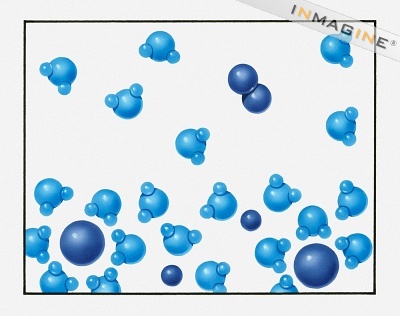
Image of an atom that make up a water molecule.


Please click the following link to watch a video that shows how water molecules are arranged in the three states of matter for water.
http://www.youtube.com/watch?v=v12xG80KcZw


The scientific method is, as it correlates to my three repeated sessions, is based on the kinetic-molecular theory (Hill & Kolb, 2007).  Molecules are in constant motion.  Water molecules are held together by forces of attraction called a covalent bond.  As the molecules are in constant motion to remain held together after a period of time the molecules start to break down and disperse as the water becomes frozen.

The repeatability of the experiment was that the average values remained consistent.

1.      (Introduction of the science concepts are):  Practical kitchen experiment using the scientific process by exploring the states of matter for water and the chemical make-up ( H and O) and the characteristics of water.  Vocabulary:  Scientific model; hypothesis; experiment; theory.

2.      (Describe my experiment, data, and conclusion):  I used two identical, room temperature, standard ice cube trays. I filled half of each tray with table salt.  I then took tray #1 and filled it with cold water, filling each compartment equally.  I took tray #2 and filled it with hot tap water, filling each compartment equally.  As I poured the water I started at the water end while decreasing chances of salt water overflowing; however some water splashed out.  This was taken into consideration when repeat of the experiment took place. I checked the cubes after 2 1/2 hours and again after 3 hours.  The first time I could see and visualize why air bubbles remained in the cubes with the mixture of salt water.  Hot water freezes faster than cold water and adding salt doesn’t seem to matter how fast the water freezes. 

Hot water boils 30 seconds faster than cold water.   I used a measured cup of cold water in a small sauce pan, let it heat up after I turned the stove top on to High, and timed the boiling factor: 3 minutes.  I allowed the same sauce pan to recover to room temperature then added one measured cup of hot tap water.  I set the pan on the stove top and timed the boiling factor at 2 1/2 minutes.  (Then poured the mixture onto the ice cubes in the sink). 

3.  (Apply my science concepts and knowledge to a real-
world application):  In order to gain the best results in sharing documented, scientific information is to repeat an experiment several times making sure that all steps were consistent without any outlying variations; it is important to keep all measures and timings consistent otherwise a variation in outcomes may occur.  This basic kitchen experiment can be used for hands on science and math for all ages, especially for young school-aged children.  Freezing ice and boiling water are basic to our environment; important concept for living in Wisconsin : )